Are you part of one of these industries?
Benchmark data is at the heart of what we do.
The data enables you to compare your own prices or supplier offers with the market in terms of competition and price.

If the internal price or the price quoted by the supplier is lower than the costdata® benchmark, this indicates a competitive scenario.


On-premises solution
Smart AI Cloud Solution
Enterprise Solution (API)
Individual Data
Who needs the data, and for what purpose?
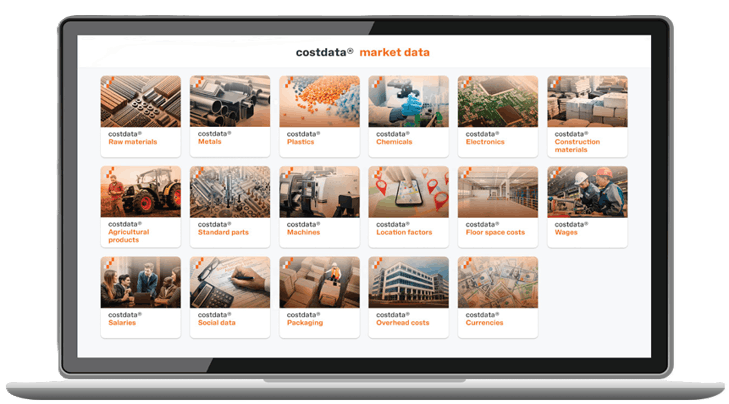
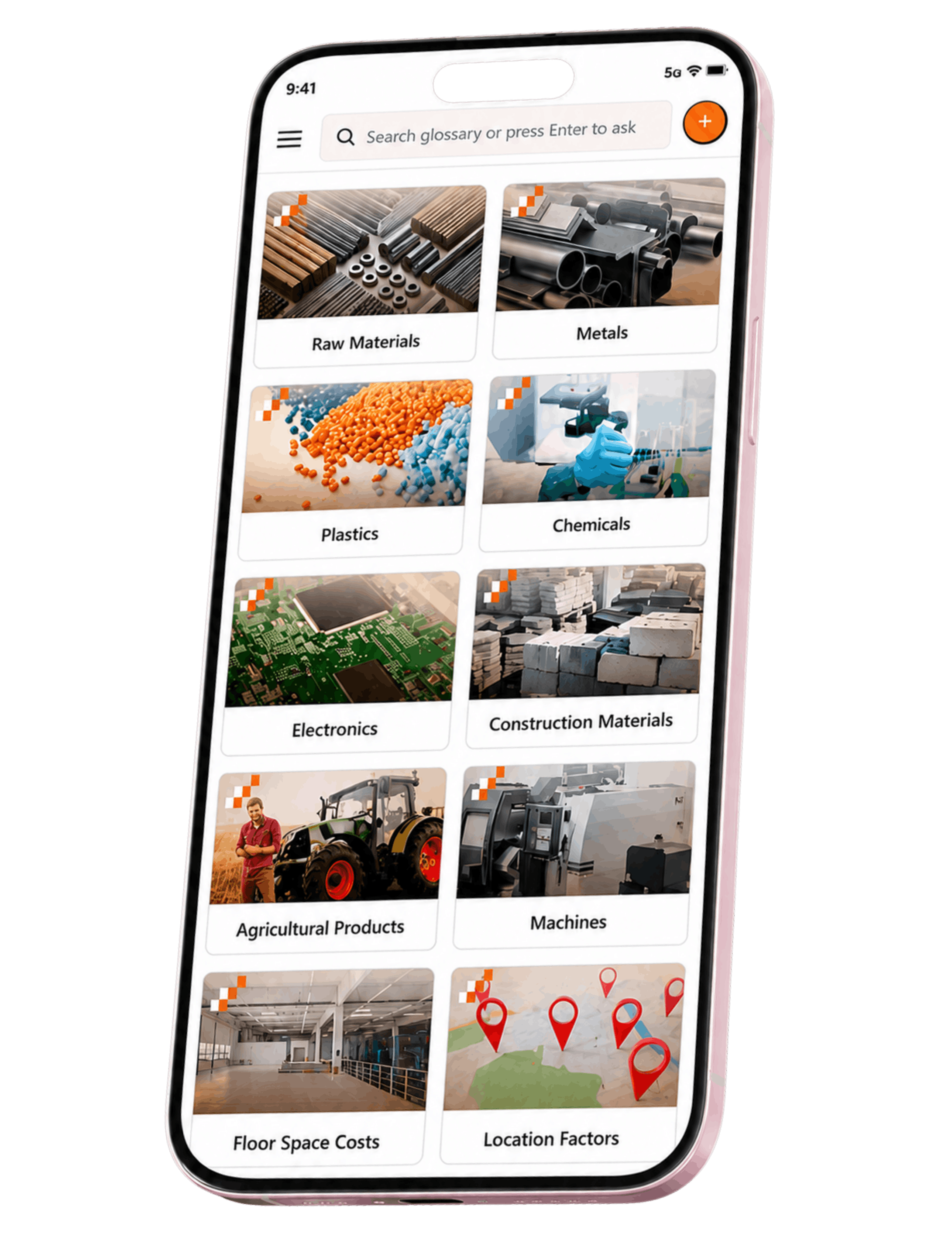
The database includes, among other things:
- Agricultural products
- Construction materials
- Chemistry
- Electronics
- Salaries
- Overheads
- Plastics
- Wages
- Machines
- Metals
- Floor space costs
- Raw materials
- Standard components
- Social data
- Location factors
- Textiles
- Packaging
- Currencies
The data is typically used in:
- Procurement
- Cost Engineering
- Controlling & Finance
- Product Development
- Supply Chain Management
- Operations & Manufacturing
- etc.
Among other things, companies benefit from:
- greater cost transparency
- better purchasing decisions
- faster calculations
- data-driven negotiations
- reduced cost risks
- thorough make-or-buy analyses
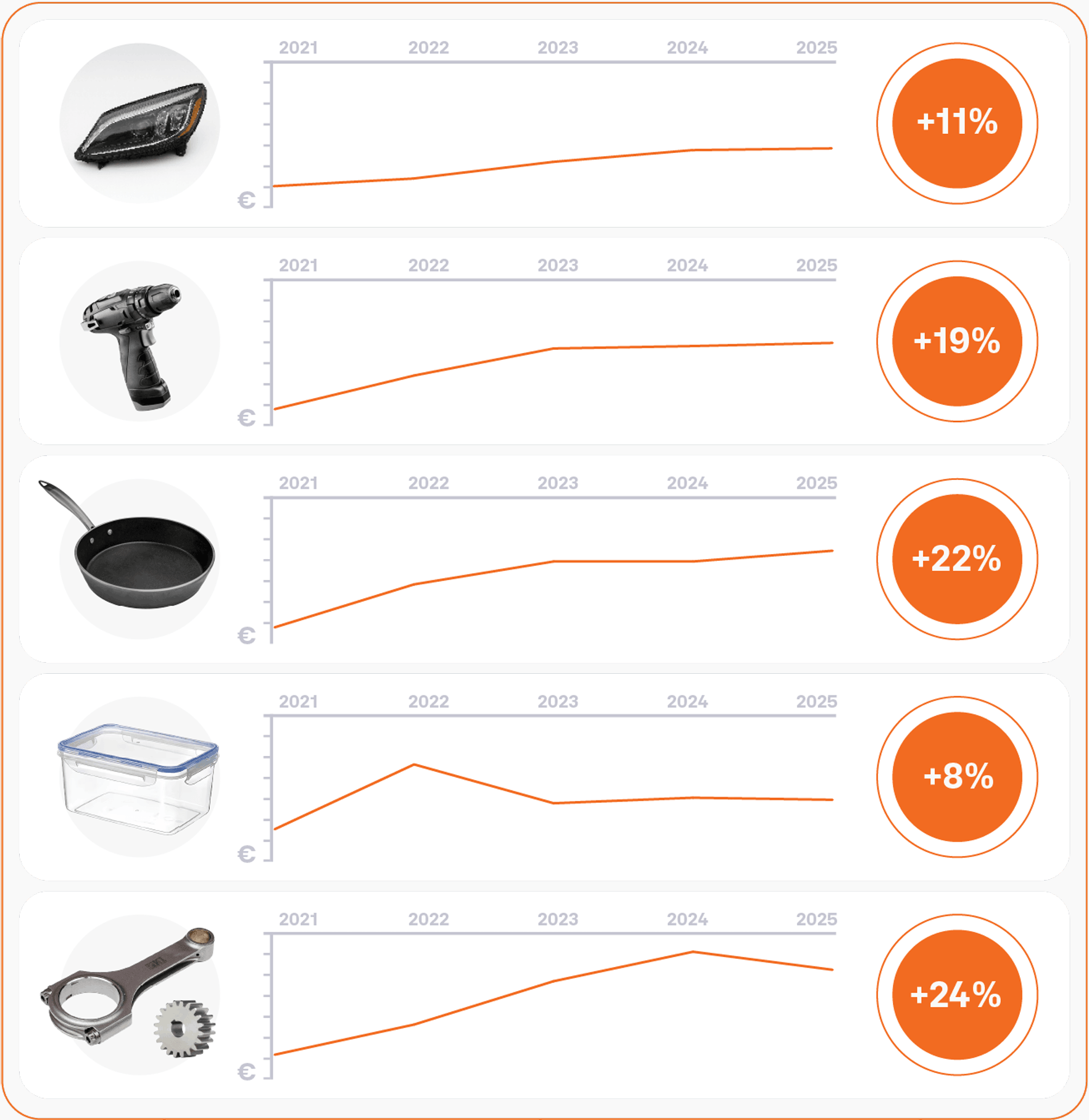
Yes, historical data and trends are available for many data sets, allowing for a better understanding of price movements and market changes.
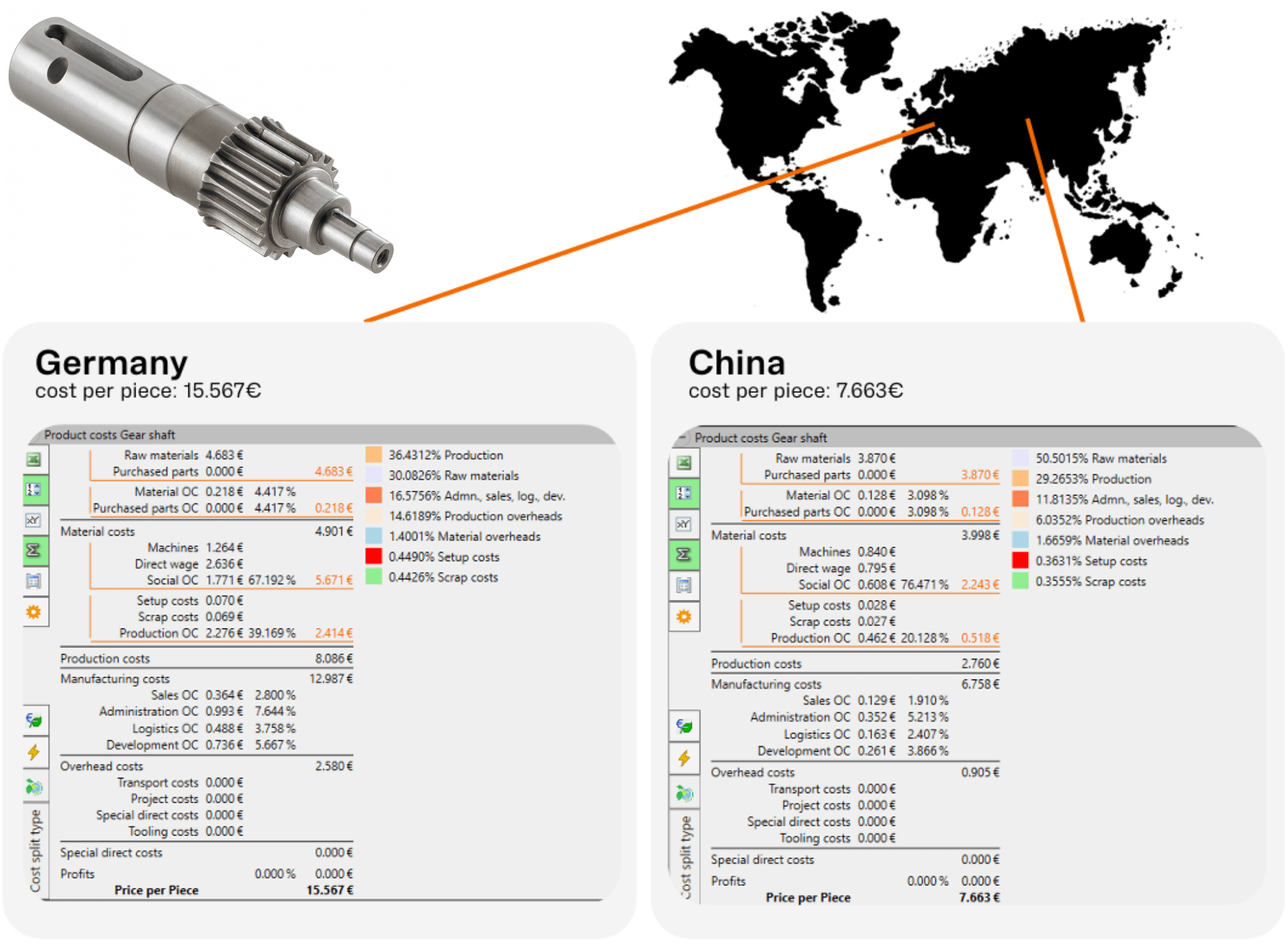
Calculation from a single source

Who needs the cost estimation software, and what is it used for?
The software is typically used for:
- Should Costing
- Target Costing
- Design-to-Cost
- Value Engineering
- Supplier Price Analyses
- Product Cost Optimization
- Make-or-buy decisions
- Location Comparisons
- etc.
Yes, companies often use the software to:
- Analyzing supplier quotes
- Questioning price increases
- Deriving realistic target prices
- Present cost drivers transparently
The solution is used in the following areas, among others:
- Automotive
- Mechanical engineering
- Electronics
- Consumer goods industry
- Aerospace
- Medical technology
- Packaging industry
- etc.
Among other things, companies benefit from:
- greater cost transparency
- faster calculations
- data-driven decisions
- better bargaining power
- standardized costing processes
- greater planning certainty
Yes, purchasing departments in particular use the software to:
- Price Validation
- Supplier Analysis
- Target Price Determination
- Preparing for Negotiations
Yes, in addition to traditional should costing in procurement, costdata® calculation is also frequently used for internal cost calculations and controlling processes. Companies use the software for a variety of purposes, including:
- Valuation of own production costs
- Analysis of Cost Structures
- Comparison of internal facilities and locations
- Identification of cost-saving opportunities
- Support for budgeting and forecasting processes
- Transparency regarding production and overhead costs
Percentage price developments for your negotiating success

Who needs the commodity price tracker, and what is it used for?
For example, a supplier requests a 15% price increase on a finished product, citing rising raw material prices as the reason.
With the CPT Tool, companies can analyze:
- which cost drivers are actually affected,
- how much commodity prices have changed,
- what proportion of the final product these factors account for,
- and what realistic market-based price trends this would result in.
While raw material prices have risen, their actual impact on the final product price is significantly lower than suppliers claim.
This provides purchasing and procurement teams with a solid foundation for:
- data-driven negotiations
- Price validations
- Escalation meetings
- Target Price Definitions
- strategic purchasing decisions
Consulting Services


Become part of our team
Book release:
Modern Cost Engineering


The "Controlled Profit Management" method
Non-binding initial assessment


Service and Project Cost Calculation
Innovation through strong partnerships


Our values - awarded and certified
EcoVadis
Cyber Essentials
kununu Top Company 2026
Customer satisfaction is our top priority.