Calculate total price: How raw material prices affect the product price
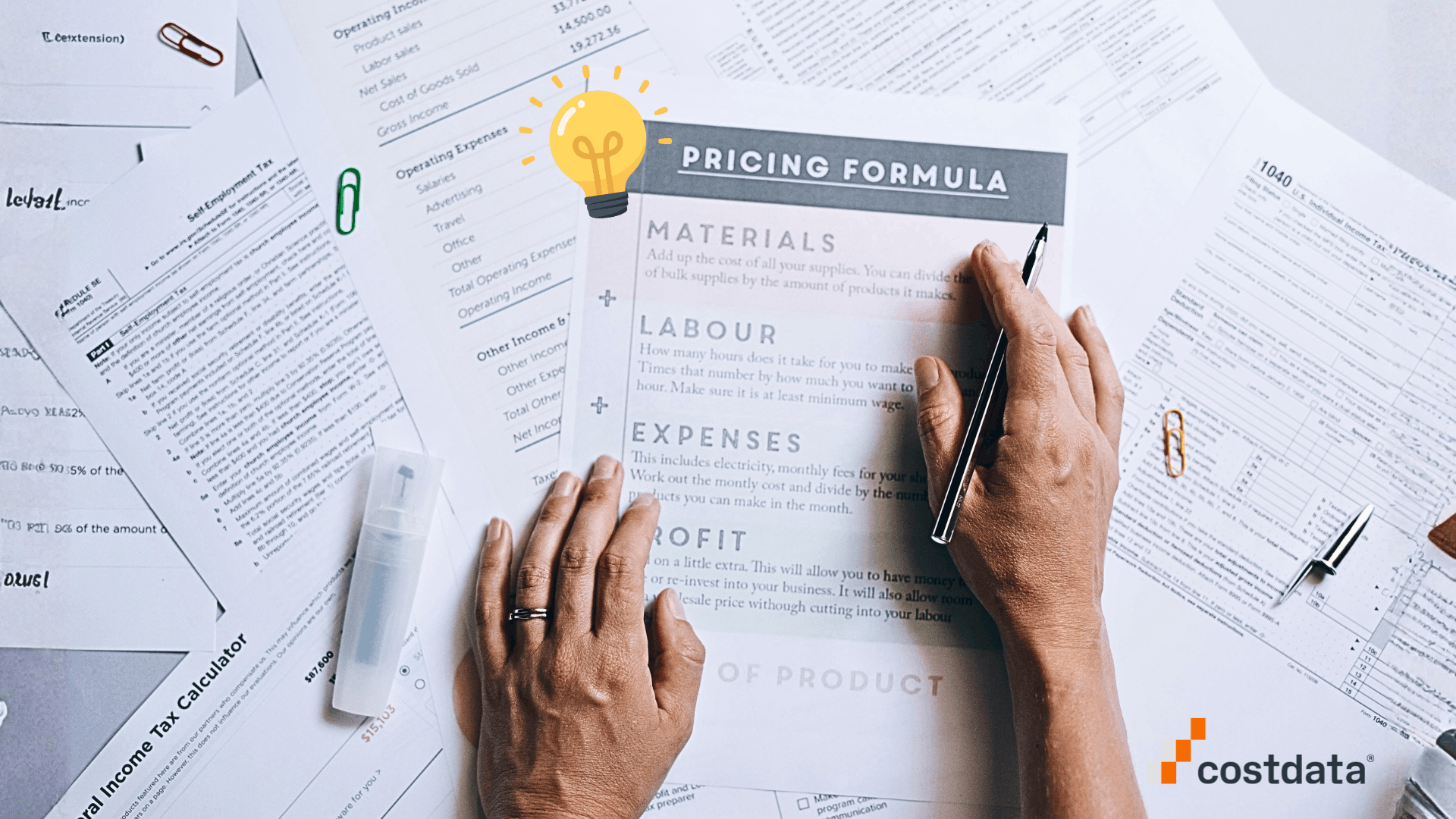
If you have ever tried to explain how the final price of a product is calculated, you are probably familiar with this typical situation. Someone asks you for the total price, and immediately a lively discussion ensues about which factors are included and which are not. Some perspectives focus on material costs, others on fixed overhead costs, and still others on the desired margin. In the end, everyone has their own idea, but a common picture rarely emerges.
However, the total price of a product is not a random result. It follows a clear logic that can be fully explained once you understand the influence of the individual elements. We want to take a look at these relationships together. In doing so, we will focus primarily on the influence of raw material prices, as they often determine how stable or volatile a product price really is.
At the same time, it is reassuring to know that companies such as costdata®, as full-service providers, can also take care of these calculations in their entirety. With the help of their software and databases, they can professionally model manufacturing costs, market prices, and total prices. However, to understand this, it is important to first consider the basics.
What the total price of a product really means
In many discussions, the impression arises that the total price consists solely of manufacturing costs and a desired margin. However, this view is often too superficial. The total price is rather the result of a multitude of influences that can reinforce or weaken each other.
If you want to determine the total price of a product, you must first understand that it reflects the entire value chain. Every stage, from material procurement to production and distribution, generates costs that affect the final price in different ways.
However, the extent to which material costs change is particularly crucial. This is because raw materials are among the most dynamic components of a calculation. Their prices fluctuate due to market developments, political influences, supply situations, or energy prices. These fluctuations make it necessary to reassess the total price at regular intervals.
The components of the total price in an understandable form
In order to calculate the total price accurately, we consider three key elements. These form the basis of every calculation and determine how the price develops from a business perspective.
Production costs are at the heart of costing. They include all costs directly related to production. These include raw materials, manufacturing, machine time, energy, and all indirect costs allocated to a product. As soon as production costs rise, pressure on margins increases. If they fall again, there is scope for price advantages or higher profits. Production costs must therefore be calculated realistically and up to date.
It is interesting to note how many calculations fail because they use static or historical raw material prices . In reality, however, these prices are constantly changing . If the price of steel, plastic, aluminum, or chemicals rises, this has a direct impact on almost all products and their manufacturing costs. The trick is not only to observe these developments, but also to include them in the calculation of the total price. A stable total price is only possible if raw material prices are accurately understood.
The margin is the amount that a company adds to the manufacturing costs in order to make a profit. It is not a fixed value. It depends on the industry, the competitive situation, market demand, and the company's strategy.
The same question always arises when material prices rise. Should the margin be maintained or does the sales price need to be adjusted? This decision is not only mathematical, but always strategic as well. However, when purchasing, it is important to remember that without a margin, there can be no further development or growth.
How raw material prices change the total price
Imagine you are producing a component from aluminum. The raw material accounts for around forty percent of the manufacturing costs. If the price of aluminum rises by twenty percent, this has an immediate impact on the overall calculation. This puts direct pressure on the margin or the final price.
In another example, you produce a plastic housing. The proportion of raw materials is lower, but energy prices fluctuate much more significantly. They also indirectly influence manufacturing costs and thus the total price.
You can already see how sensitive these calculations become as soon as a single price factor changes. The total price of a product is therefore not just a number. It is a living reflection of the market.
Why the total price should be recalculated regularly
Many companies work with outdated calculations and are later surprised when prices no longer match actual costs. However, as we have now learned, a total price is never static. It should be updated regularly, especially when raw material markets are dynamic. It is not enough to perform a complete calculation once a year. It is much more important to continuously monitor market prices and internal cost structures. This is the only way to ensure that the total price accurately reflects reality.
This is where service providers such as costdata® come into play. They combine the calculation of manufacturing costs with market prices and enable total prices to be determined systematically and reliably. This is done on the basis of current market data and professional software that makes the calculations transparent.
A practical example from industry
Imagine your company manufactures metal components for machines. The manufacturing costs consist of materials, labor, machine performance, and energy. In recent years, aluminum has been relatively stable, but suddenly the market price rises significantly over several months.
Without regularly reassessing your manufacturing costs, the total price remains unchanged. Meanwhile, however, your margin is gradually declining. Only when the figures are reviewed again do you notice the discrepancy. The price adjustment that would be necessary suddenly seems very high and difficult to justify.
However, if you regularly work with current market prices, you would immediately notice minor changes. This allows you to adjust the total price in smaller increments. Your customers will understand these adjustments more easily, and your margin will remain stable.
The total price is more than just a sum
The total price of a product is influenced by many factors. It is a combination of manufacturing costs, raw material prices, overheads, and margin decisions. To calculate it correctly, you need to understand these interrelationships and the reality of the market.
The key lies in an up-to-date and transparent database. Companies such as costdata® support you as full-service partners by analyzing manufacturing costs, evaluating market prices, and calculating total prices for you. This gives you the assurance that your figures are not only correct, but also reliable and traceable. Once you have a clear understanding of the total price of a product, you have a basis for strategic decisions, compelling offers, and sustainable profitability.


.svg)